A Journey Toward Reconcilation with LBGTQ+ Friends

Elaine Eberhart and I have been friends since the mid-1980s when we served together on the pastoral staff of First UMC in Oak Ridge, Tennessee. As a delegate to General Conference in 1984, I regrettably voted for the legislation that prohibited the ordination of “self-avowed practicing homosexuals.” A few years later, Elaine surrendered her ordination in an act of integrity and courage.

Elaine’s grace-formed life and faithful witness contributed to my conversion and growth as a person, a Christian disciple, pastor, bishop, and teacher. In 2018, I wrote a short blog on why I changed my mind. Though Elaine was not specifically named, she is prominently among those who contributed immeasurably to my changed perspective and commitment. The blog received more than seventy thousand views. You may access it here: https://shiftingmargins.com/2018/09/25/why-i-changed-my-mind-about-homosexuality-and-the-church.

I continue to repent of the harm inflicted on LBGTQ+ siblings by my complicity and failure of leadership. Elaine has graciously extended her forgiveness, and our friendship has deepened. Although she has had a marvelously productive ministry as a lay person in such institutions as Emory University, Mayo Clinic, and the University of Tennessee, I regret that her exceptional gifts as a United Methodist pastor went unutilized.

In June 2025, I was among those who shed tears of joy as Elaine’s clergy credentials were restored by the Holston Annual Conference. It was a momentous occasion, a visible sign and foretaste of God’s reign of justice, reconciliation, and transformation.

You are welcome to join us on December 9 by zoom as Elaine and I engage in conversation. On this webinar, we share our story in hopes that our journey might be helpful to others who seek to experience the reconciliation so desperately needed in our world and church.

This free webinar is for both laity and clergy and will be held December 9, 2025, from 2 pm to 3 pm. To receive the link for the webinar, please register here https://clergyeducation.com/events/2512carder/.

Choosing Leaders

This election season challenges me to clarify the qualities of leadership that most closely reflect the core values of my faith, whether those being chosen are for government, the church, or institutions/agencies. Here are some qualities I look for. What’s on your list?

1. Personal Character and Temperament: truthfulness and reflections of “Fruits of the Spirit”: love, joy, peace, patience, kindness, generosity, faithfulness, gentleness, and self-control.” Leaders greatly influence the culture of the entity they lead. Power divorced from honesty, moral character, and mature temperament becomes manipulative, coercive, self-serving, and destructive, thereby thwarting the common good and inflicting suffering on others. 

2. Demonstrated Commitment to Justice as Equity, Fairness, and Enabling the Least and Most Vulnerable to Flourish as God’s Beloved Children. Developing and implementing policies that protect and enable the powerless to have access to God’s table of abundance strengthens the whole society. Merely protecting and advancing the privileges of the privileged fails the justice test and results in exploitation, inequity, abuse, and even death.

3. Proven Recognition of and Respect for the Inherent Worth, Dignity, and Wellbeing of Every Person. Leaders set the tone for how those they influence treat others. Using a biblical image, leaders are shepherds who know, defend, nurture, preserve, and guide others. On the other hand, “hirelings” fleece, exploit, abandon, deplete, and may even slaughter the sheep. The shepherd recovers and restores the weak; the hireling scatters and disregards the vulnerable. 

4. A Disciplined, Tough Mind and a Compassionate, Empathetic Heart. This is what Jesus described as being “wise as serpents and harmless as doves.” Leaders must exhibit both intellectual and social intelligence. Intellect without empathy humiliates and demeans; empathy without intellect risks enabling destructive behavior and being co-opted for nefarious purposes.

5. Compelling Vision for the Common Good and Sensible Strategy for Moving Toward the Vision. For me, the vision is defined in the biblical images of “the kingdom of God” and “the New Creation;” and it is embodied in the life, teaching, death, and resurrection of Jesus the Christ. Components include these:

▪ the dignity and worth of ALL persons are respected, preserved and nurtured.

▪ the interrelatedness, interdependence, and mutual flourishing of creation is respected.

▪ the oneness and unity of the human family is reflected in actions and policies.

▪ service ranks above profits, restoration surpasses retribution, and hope defeats despair.

I realize that no one fully embodies these qualities, and they may seem idealistic and unattainable. Admittedly, they are more aspirational than concretely visible in our polarized, fragmented, and violent world.

Yet, we need leaders at all levels whose aspirations transcend mere self-interest, acquiescence to things as they are, and cynical scorning of such ideals as freedom, compassion, respect, and justice for ALL.
                

Trying to Make Sense of My Life

I’ve spent much time in recent years remembering and reflecting on events, relationships, and stories that have shaped who I am. It says a lot about my station in life. I’m poignantly aware of having exceeded by more than a decade my biblically allotted “three score years and ten.”

A few colleagues and several family members, including grandchildren, urged me to share stories from my life and more than sixty years of ordained ministry. It has been a daunting, emotional, frustrating, and yet healing process.

Reliving past struggles, mistakes, failures, hurts, griefs, disappointments, and losses resurfaces unresolved guilt and regrets. The grace I have proclaimed for six decades has been put to a test as a lived reality. Accepting forgiveness for myself is sometimes harder than extending it to others.

But the process of remembering, reflecting, and writing has been predominantly a source of healing, thanksgiving, and hope. I am in awe of the ineffable mystery and resilience of life. Each person’s finite story is mysteriously interwoven into an Infinite Story with limitless connections and possibilities.

Seemingly inconsequential events, encounters, or decisions in retrospect were life-transforming. “What ifs” are part of remembering: What if I had not gone to that conference? What if I had said “no” to a particular invitation? What if I had not enrolled in that school, or taken a different class, or entered an alternative vocation?

Life is a mysterious combination of choices made and conditions prescribed, situations over which we have control and circumstances beyond our control, the “givens” of nature and the influence of nurture.

Life is simply too complex, too interrelated, and mysterious to be fully described. Memory never records the totality of any incident and recall always reflects current contexts as much as the event itself.

Therefore, writing a memoir requires a stance of vulnerability and humility in remembering and interpreting the circumstances, experiences, events, perceptions, and relationships that constitute one’s life. The process is risky and fraught with temptations for distortion and misrepresentation.

The book, Shifting Margins: From Fear and Exclusion to Love and Belonging is my attempt to make sense of my own life. It began with simply putting memories on paper, starting with my earliest recalled experiences and moving through seven decades. Reviewing journals and accumulated files of correspondence and other documents resurfaced forgotten events, transitional experiences, and relationships. The result was almost six hundred pages!

With the help of a skilled editor (who happens to be my daughter), identifying themes, and creating a coherent and readable manuscript followed. Reducing the manuscript by two-thirds became symbolic of my reality. Life’s experiences are narrowing. The circle of engagement and involvement is diminishing. Physical energy is declining. Cognitive functioning remains but with less quickness and retention. The end is far closer than the beginning!

After all this remembering and reflecting, I have concluded that perhaps the goal isn’t to make sense of life. Rather, it is to participate in its unfolding mystery with love, perseverance, and hope.

Whatever the stage, there are opportunities to give and receive love. There are challenges to confront with determination and courage. There is hope that our stories ultimately fold into God’s Story of Endless Love and Resurrection Life.

To order Shifting Margins, https://www.marketsquarebooks.com/store/p123/Shifting_Margins.html

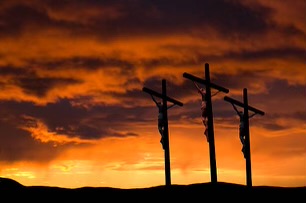
Jesus’s Crucifixion and Other Victims of Execution

Amy-Jill Levine’s recent book, Witness at the Cross, includes a chapter entitled “The Other Victims.” It is the account of Jesus’s interaction with the two anonymous men crucified with him. Dr. Levine aptly suggests that the inclusion by the Gospel writers of these two condemned men forces us to consider those awaiting execution in today’s prisons.

Over my years as a pastor and a bishop, I have spent many hours sitting with men condemned to be executed. Unlike the men in the Gospels, the ones I have visited have names. I have known some of their families. I listened to the anguished cries of a mother who watched her son executed by the state. She loved her son no less than the mother of the person he had murdered. In the name of “justice for the victim,” the state created additional victims and added to the culture of violence that plagues our world.

South Carolina is set to resume executions later this month. Since the state has had difficulty obtaining the lethal drugs needed to put Richard Moore to death, he must choose between the electric chair and the firing squad. Below is a letter I have sent to the governor requesting that he stop this barbaric action.

May Jesus’s attentiveness to the two other victims of state-sponsored execution on that fateful day two thousand years ago cause us to remember the approximately 2500 persons awaiting execution in our prisons today. From my understanding of the Incarnation, their execution will be a repeat of Jesus’s crucifixion!

It was for the two “bandits,” those participating in the execution, and us that Jesus prayed: “Father, forgive them, for they don’t know what they are doing” (Luke 23:34 CEB).

The Honorable Henry McMaster
State House
1100 Gervais Street
Columbia, South Carolina 29201

Dear Governor McMaster:

               I wish to strongly urge you to stay the execution of Richard Moore, currently scheduled to take place April 29. While Mr. Moore’s crime is a grave tragedy for which accountability is appropriate, it does not reach the level of premeditation and heinousness for which the death penalty is intended. From the news reports and court records, he entered the convenient store unarmed and his offense was fueled by drug addiction; therefore, the resulting murder was not premediated and took place in a struggle over a weapon.

               During this Holy Week for Christians, we relive the state sponsored execution of Jesus the Christ. As a retired United Methodist bishop, pastor, and seminary professor, I strongly support my denomination’s opposition to the death penalty. No evidence exists that executions are a deterrent to crime, and death inflicted by the state only adds to the culture of violence that permeates our society. Having visited persons on death row over more than fifty years of Christian ministry, I can testify that it only adds to the number of victims of violence as the families and friends of those executed are victimized by the state.

 I hope that before you make your decision whether to stop this barbaric act that you will exercise courage and visit with Mr. Moore and his family. As Jesus was attentive in his dying hours to the two men executed with him and offered forgiveness and assurance, I hope you will be attentive to Mr. Moore as a fellow human being, made in the divine image and redeemed in Jesus Christ. As one who has publicly declared as being “pro-life,” please be consistently pro-life and respect Mr. Moore’s right to life.

               Please be assured of my prayers as you discern the fate of Mr. Moore. May you bear witness to the justice and compassion as made known in Jesus the Christ, whom you and I seek to follow and serve.

Prayerfully yours,

Kenneth L. Carder

Epiphany and the January 6 Violent Insurrection

What an interesting coincidence that the violent attempt to overturn the presidential election of 2020 occurred on the day Christians celebrate Epiphany! On the first anniversary of that ugly day and as another Epiphany arrives, it seems appropriate to reflect on the relationship between them.

Epiphany comes from a Greek word meaning “appearance,” “manifestation,” or “revelation” and is commonly linked with the visit of the Magi to the Christ child (Matthew 2:1-12). The Magi, from the region of what we know as Iraq and Iran, were foreigners who studied the stars for signs of divine presence and revelation.

An implication of Matthew’s story is that the God made known in Jesus the Christ reveals God’s self in multiple ways and to ALL people. God’s saving presence is not limited to our religion, our race, our nation, our culture, our political party. God is sovereign over ALL!

Matthew portrays Jesus’ birth as a threat to prevailing political power. He specifically declares that the babe of Bethlehem is “king”! That’s an obvious threat to King Herod, who ruled the known world with brutality, violence, and cruelty.

Maintaining power was Herod’s priority and he would go to any length to hold onto that power, including killing members of his own family and innocent children. He was deceptive by pretending that he was only wanting to pay homage to the newborn king. His methods were calculated, brutal, and catastrophic.

Herod’s actions were motivated by fear of losing power and he considered instilling fear in others a necessary means of control. He was enabled by throngs of supporters who, too, were afraid and who had bought into the lie that Herod ruled by divine authority.

Matthew’s story of the nativity and Herod’s response is as contemporary as today’s news! It is about more than Jesus, the magi, and Herod. It is about the human condition and the exercise of power and control, especially political power.

Power is addictive! Fear fuels the addiction, the fear of losing control. It’s present in all of us to varying degrees. However, when maintaining power and control results in deception, coercion, bullying, and violence, the results are pervasive and lethal for individuals, communities, and nations.

The storming of the nation’s capital on January 6, 2021, was a blatant attempt to hold onto power and control. It was fueled by fear and a “big lie,” and it was enabled by some members of Congress, political advisors, and even some religious folk who believed that the former president was divinely anointed.

Jesus and Herod represent two “kingdoms” and two expressions of power. Herod represented the power of the Roman empire with its political and military clout. Jesus embodied “the kingdom of God,” the reign of love, justice, generosity, and peace/shalom. Herod was committed to the love of power. Jesus was committed to the power of love!

The insurrection in Washington, D.C. on January 6, 2021, was an epiphany, a manifestation or revelation that Herod’s fears, methods, and abusive exercise of power remain with us.

Epiphany Day in the church year, however, reveals another kingdom at work in our world. It represents an alternative to the deception, coercion, bullying, and violence rooted in the fear of lost power and control.

That alternative is the way of compassion, justice, honesty, and service on behalf of the common good. It is the way shown to us by Jesus of Nazareth, about whom the Apostle Paul wrote: “. . . though he was in the form of God, did not regard equality with God as something to be exploited, but emptied himself, taking the form of a slave, being born in human likeness. And being found in human form, he humbled himself and became obedient to the point of death—-even death on a cross” (Philippians 2:6-8).

May our celebration of Epiphany and the remembrance of the Insurrection of January 6, 2021, include renewed commitment to follow the One who transforms the world through the power of self-emptying love.

To Whom Shall We Listen?

It may be the most important question in this age of media overload, “alternative facts,” “fake news,” partisan political propaganda, and competing religious voices. To whom do we listen in determining our own perspectives and our responses to current realities?

Make no mistake about it; we are shaped by the voices we listen to. Words matter! They shape how we feel and act. Hateful words provoke hatred. Divisive words divide people. Angry words spark angry action. Arrogant words generate haughty actions. Violent words incite violence. Lies distort reality. Falsehoods inflame prejudices.

On the other hand, loving words sow seeds of compassion. Reconciling words open doors for reconciliation. Gentle words soften hard hearts. Humble words invite dialogue. Peaceful words promote peace. Truthful words foster understanding.

For followers of Jesus, the Transfiguration story provides the answer to the question, “To whom shall we listen?” Jesus and his disciples were at a crossroads, on their way to Jerusalem, the center of religious, political, and economic power.

Ahead loomed confrontation and conflict as the values of the reign of God clashed with the values and practices of established religion and the Roman Empire.

The disciples are in for a test of their loyalty and the source of their authority. To whom will they listen to shape their actions and loyalties? Their lives and destiny depend on their choice. Will they listen to the one who had called them to “come follow me;” or will their actions be determined by the voices of expediency, safety, hatred, bigotry, and violence?

Mysteriously, Peter, James, and John experienced Jesus as the fulfillment of the authority of Moses and Elijah, the liberator and prophet. The authoritative voice from the heavens declared, “This is my Son, the beloved; listen to him!”(Mark 9:7)

It’s time for us to decide to whom we will listen in these uncertain, polarizing, hate-filled, violent times. What voices are shaping our actions and relationships? FOX News? MSNBC? Talk radio? Politicians and their spokespersons? Religious celebrities and power seekers?

What would it mean to listen to the One who is the Word made flesh, Jesus the Christ?

For the last three years, I have begun each day of Lent reading from the Sermon on the Mount. They are the first words I read in the morning.  Before email, Facebook, and news articles. The words of Jesus thereby become the filter through which I read and hear everything else.

The contrast of the voice of Jesus and voices of much of social media, talk radio, television, and the internet is stark. Here are a few of the radical words of Jesus in the Sermon on the Mount:

Blessed are the poor in spirit, those who mourn, the meek, those who hunger for righteousness, the pure in heart, the peacemakers, the persecuted . . .

Love your enemies and pray for those who persecute you.

Turn the other cheek, go the second mile.

Practice forgiveness if you expect to be forgiven.

Don’t make a show of your piety.

Judge not that you be not judged.

Don’t be anxious about tomorrow.

You cannot serve God and wealth.

Seek first the kingdom of God and his righteousness.

As the disciples faced an uncertain and tumultuous future while on the Mount of Transfiguration, we live in a world of competing voices. We would do well to heed the voice the disciples heard from the heavens:

            “This is my Son, the Beloved; listen to him!” (Mark 9:7)

Hope Beyond the Election

Anxiety reigns as the election draws near! Both sides of the political divide imagine the results in apocalyptic terms. Indeed, much is at stake! Nothing less than the future of our democracy and stability of society’s institutions hang in the balance. The Right and the Left and the Middle have contrasting interpretations of “democracy” and “stability”; and visions of the nation’s desired future are colliding in the choices citizens are making in the election.

Admittedly, I am more anxious about the future of my homeland than I have been in my almost eighty years. I fear the consequences of continued polarization, ideological warfare, political dysfunction, corruption, dishonesty by governmental and institutional leaders, the harshness and crudeness of our discourse, and the blatant racism and tribalism expressed at the highest levels of our government.

Then, there is the Covid-19 pandemic that is killing more and more of our citizens while many deny its deadliness. I yearn for empathetic, compassionate leadership that pays attention to God-given science and puts the welfare of ALL above personal aggrandizement and political expediency.

Now is the time to get in touch with the foundation that will remain beyond the election results. This isn’t the first time people of faith have endured the crumbling of national, institutional, and cultural foundations. Neither will it be the last time catastrophic threats will appear.

Out of the agonizing laments of a collapsing nation and widespread despair came this resounding declaration following the collapse of Judah and the destruction of the economic and social life among the citizenry at the hands of Babylon:

The steadfast love of the LORD
     never ceases, 
his mercies never come to an
     end; 
they are new every morning;   
  great is your faithfulness. 
The LORD is my portion, says
     my soul,
  therefore I will hope in him.                    
                   Lamentations 3:22-24

That is the bedrock foundation that will not be shaken by the election. Hesed, the Hebrew word translated as “steadfast love,” declares God’s unrelenting, loyal, unshakable compassion, mercy, and justice. It is at the heart of God’s character, the essence of the Divine Being.

Love, Compassion, Mercy, and Justice will remain deeply embedded in the nature of reality, whatever happens in the election. They are divine components of creation itself. And, nations and institutions rise and fall in accordance with how they embody “the steadfast love of the Lord” and the mercy that never ceases.

Whatever happens in the election, God will be faithful in “defending the orphans, widows, and sojourners (immigrants); announcing good news to the poor and release to the captives; entering solidarity with the poor, the vulnerable, the dying; breaking down the dividing walls of hostility and welcoming ALL into a beloved community; and bringing to completion the reign of justice, compassion, hospitality, and joy.

I remain anxious about the outcome of the election. But I will not give up! Indeed, there will continue to be opportunities to expand the circle of love, practice compassion in places of suffering, extend mercy to those in need, and work for justice so all may have access to God’s table of abundance.

“The steadfast love of the Lord never ceases, his mercies never come to an end.” Therein lies my hope and my calling beyond the election.

Open Letter to Senator Lindsey Graham

Below is a letter I have sent to Senator Lindsey Graham who is my senator from South Carolina and chairman of the Senate Judiciary Committee.

Dear Senator Graham:

The death of Justice Ruth Bader Ginsburg and the process of replacing her has placed you at the center of the intensifying crises facing our country. Far more is at stake than the choosing of a member of the Supreme Court. Trust in the democratic processes and those who lead them has been eroding for years and has now reached a tipping point. Such trust depends upon the integrity, truthfulness, and commitment to the common good of people such as you who wield political power.

You, President Trump, and Senator McConnell are now the decisive leaders who will determine the timing and process for filling the vacancy on the Supreme Court and the integrity with which the process unfolds. Your personal character and the integrity of the Senate hangs in the balance. You unequivocally declared in 2016 that if a vacancy occurred during the presidential primary season the naming of a replacement would be made by the person elected in November.

 Senator McConnell, with the full support of the Republican caucus in the Senate, blocked the duly nominated Judge Garland with the rationale that no Supreme Court nominee should be approved in an election year. The decision to move forward in replacing Justice Ginsburg with less than two months remaining before the election is rank hypocrisy and Machiavellian duplicity.

By creating the precedent of blocking President Obama’s nominee, you and Senate Republicans sowed poisonous seeds of cynicism and exacerbated the dysfunction of the Senate. Whatever rationalization you use to justify reversing that principle when the president is of your own party, you will further undermine your own personal integrity and our trust in the Senate and those of you who occupy the position.

I appeal to your personal sense of integrity and fairness, and your commitment to the ideals of our democracy to delay consideration of a replacement of Justice Ginsburg until after the election. Doing so will send a signal that personal character still matters to you and your Republican colleagues; and it will be one step toward restoring trust in you and our democratic institutions.

 As a person of faith, I am reminded of the words of Jesus, “What will it profit a person if he/she gains the whole world and loses his/her soul.” You and your colleagues may gain this Supreme Court seat; but doing so at the cost of your character and integrity will eventually destroy you and further weaken the credibility of our democratic institutions. Providence and history will not look kindly on such action. Neither will voters in the upcoming election.

Sincerely,

Kenneth L. Carder

God Works Through Science Too

In response to Dr. Anthony Fauci’s expressed concern about a prevalent “anti-science”  bias in our society, Franklin Graham posted on his Facebook: “Science isn’t truth—God is.

The evangelist’s comment was an attempt to discredit or minimize scientists’ warnings and guidelines regarding COVID-19. The comment reflects a long-standing effort to drive a wedge between science and religion.

Pitting science and theology against one another is one of religion’s most costly and deadly mistakes. The church persecuted and executed scientists in the name of defending God; and the current attempts to undermine epidemiologists and other scientific specialists dealing with the COVID pandemic is killing people.

I was privileged to serve as pastor of First United Methodist Church in Oak Ridge, Tennessee in the 1980s. The congregation consists of scores of Ph.D. scientists and professional engineers.  Their intellectual brilliance, commitment to the pursuit of truth, devotion to contributing to the healing of creation, and humility in admitting their mistakes inspired me and broadened my own understanding of who God is and how God works in the world.

One of my Oak Ridge friends was Dr. William Pollard, a world-renowned physicist and Episcopal priest. He spoke and wrote often of how his science expanded his understanding of God and how his faith informed the purpose and use of his science. He reminded us all that God is the source of ALL truth, scientific and theological/Biblical, and that all truth must be approached with humility and mystery.

Franklin Graham is right: God is truth! He is wrong when he pits religious revelation over against scientific data. God’s revelation is contained within creation as well as the pages of Scripture. In reality, the creation itself is the first “Bible,” preceding the Hebrew and Christian Scriptures by millions of years.

From my perspective, science is one of God’s most generous gifts to humanity. Yes, it can be–and often is–misused, but no more than religion has been and continues to be used for devilish purposes. Both religion and science can also be arrogant and idolatrous.

But anti-science is a dangerous form of practical  atheism. It denies God’s sovereign presence and work in ALL creation and negates our stewardship of God’s gifts. Science is God’s gift over which we are to exercise stewardship in service to the healing of creation.

Albert Einstein put it succinctly: “Science without religion is lame, religion without science is blind.” 

God Works through Science Too

In response to Dr. Anthony Fauci’s expressed concern about a prevalent “anti-science”  bias in our society, Franklin Graham posted on his Facebook: “Science isn’t truth—God is.

The evangelist’s comment was an attempt to discredit or minimize scientists’ warnings and guidelines regarding COVID-19. The comment reflects a long-standing effort to drive a wedge between science and religion.

Pitting science and theology against one another is one of religion’s most costly and deadly mistakes. The church persecuted and executed scientists in the name of defending God; and the current attempts to undermine epidemiologists and other scientific specialists dealing with the COVID pandemic is killing people.

I was privileged to serve as pastor of First United Methodist Church in Oak Ridge, Tennessee in the 1980s. The congregation consists of scores of Ph.D. scientists and professional engineers.  Their intellectual brilliance, commitment to the pursuit of truth, devotion to contributing to the healing of creation, and humility in admitting their mistakes inspired me and broadened my own understanding of who God is and how God works in the world.

One of my Oak Ridge friends was Dr. William Pollard, a world-renowned physicist and Episcopal priest. He spoke and wrote often of how his science expanded his understanding of God and how his faith informed the purpose and use of his science. He reminded us all that God is the source of ALL truth, scientific and theological/Biblical, and that all truth must be approached with humility and mystery.

Franklin Graham is right: God is truth! He is wrong when he pits religious revelation over against scientific data. God’s revelation is contained within creation as well as the pages of Scripture. In reality, the creation itself is the first “Bible,” preceding the Hebrew and Christian Scriptures by millions of years.

From my perspective, science is one of God’s most generous gifts to humanity. Yes, it can be–and often is–misused, but no more than religion has been and continues to be used for devilish purposes. Both religion and science can also be arrogant and idolatrous.

But anti-science is a dangerous form of practical  atheism. It denies God’s sovereign presence and work in ALL creation and negates our stewardship of God’s gifts. Science is God’s gift over which we are to exercise stewardship in service to the healing of creation.

Albert Einstein put it succinctly: “Science without religion is lame, religion without science is blind.” 

What are the implications for the current pandemic crisis?

The novel coronavirus, COVID-19, is a public health challenge that requires the world’s best scientific minds. It is a new biological phenomenon about which science learns more every day. Let us support the scientists who are devoting their God-given expertise to understanding and defeating the virus.

The pandemic is also an ethical, theological challenge. The heart of our religious faith is summed up in the commandment that we shall love God and our neighbor. Science is showing us how we can best love our neighbors in face of COVID-19:

Wear a mask

Practice social distancing

Wash your hands

Avoid crowds

Support research for vaccines and therapeutics

Now is not the time for partisan politics and self-serving efforts to undermine scientists. Now is the time to seek and live the Truth revealed in science AND religion. For those of us who claim allegiance to Jesus, it boils down to loving one another as Christ loves us.