Trying to Make Sense of My Life

I’ve spent much time in recent years remembering and reflecting on events, relationships, and stories that have shaped who I am. It says a lot about my station in life. I’m poignantly aware of having exceeded by more than a decade my biblically allotted “three score years and ten.”

A few colleagues and several family members, including grandchildren, urged me to share stories from my life and more than sixty years of ordained ministry. It has been a daunting, emotional, frustrating, and yet healing process.

Reliving past struggles, mistakes, failures, hurts, griefs, disappointments, and losses resurfaces unresolved guilt and regrets. The grace I have proclaimed for six decades has been put to a test as a lived reality. Accepting forgiveness for myself is sometimes harder than extending it to others.

But the process of remembering, reflecting, and writing has been predominantly a source of healing, thanksgiving, and hope. I am in awe of the ineffable mystery and resilience of life. Each person’s finite story is mysteriously interwoven into an Infinite Story with limitless connections and possibilities.

Seemingly inconsequential events, encounters, or decisions in retrospect were life-transforming. “What ifs” are part of remembering: What if I had not gone to that conference? What if I had said “no” to a particular invitation? What if I had not enrolled in that school, or taken a different class, or entered an alternative vocation?

Life is a mysterious combination of choices made and conditions prescribed, situations over which we have control and circumstances beyond our control, the “givens” of nature and the influence of nurture.

Life is simply too complex, too interrelated, and mysterious to be fully described. Memory never records the totality of any incident and recall always reflects current contexts as much as the event itself.

Therefore, writing a memoir requires a stance of vulnerability and humility in remembering and interpreting the circumstances, experiences, events, perceptions, and relationships that constitute one’s life. The process is risky and fraught with temptations for distortion and misrepresentation.

The book, Shifting Margins: From Fear and Exclusion to Love and Belonging is my attempt to make sense of my own life. It began with simply putting memories on paper, starting with my earliest recalled experiences and moving through seven decades. Reviewing journals and accumulated files of correspondence and other documents resurfaced forgotten events, transitional experiences, and relationships. The result was almost six hundred pages!

With the help of a skilled editor (who happens to be my daughter), identifying themes, and creating a coherent and readable manuscript followed. Reducing the manuscript by two-thirds became symbolic of my reality. Life’s experiences are narrowing. The circle of engagement and involvement is diminishing. Physical energy is declining. Cognitive functioning remains but with less quickness and retention. The end is far closer than the beginning!

After all this remembering and reflecting, I have concluded that perhaps the goal isn’t to make sense of life. Rather, it is to participate in its unfolding mystery with love, perseverance, and hope.

Whatever the stage, there are opportunities to give and receive love. There are challenges to confront with determination and courage. There is hope that our stories ultimately fold into God’s Story of Endless Love and Resurrection Life.

To order Shifting Margins, https://www.marketsquarebooks.com/store/p123/Shifting_Margins.html

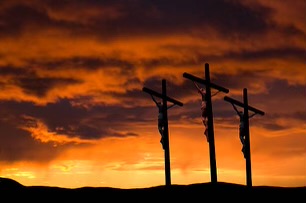
Jesus’s Crucifixion and Other Victims of Execution

Amy-Jill Levine’s recent book, Witness at the Cross, includes a chapter entitled “The Other Victims.” It is the account of Jesus’s interaction with the two anonymous men crucified with him. Dr. Levine aptly suggests that the inclusion by the Gospel writers of these two condemned men forces us to consider those awaiting execution in today’s prisons.

Over my years as a pastor and a bishop, I have spent many hours sitting with men condemned to be executed. Unlike the men in the Gospels, the ones I have visited have names. I have known some of their families. I listened to the anguished cries of a mother who watched her son executed by the state. She loved her son no less than the mother of the person he had murdered. In the name of “justice for the victim,” the state created additional victims and added to the culture of violence that plagues our world.

South Carolina is set to resume executions later this month. Since the state has had difficulty obtaining the lethal drugs needed to put Richard Moore to death, he must choose between the electric chair and the firing squad. Below is a letter I have sent to the governor requesting that he stop this barbaric action.

May Jesus’s attentiveness to the two other victims of state-sponsored execution on that fateful day two thousand years ago cause us to remember the approximately 2500 persons awaiting execution in our prisons today. From my understanding of the Incarnation, their execution will be a repeat of Jesus’s crucifixion!

It was for the two “bandits,” those participating in the execution, and us that Jesus prayed: “Father, forgive them, for they don’t know what they are doing” (Luke 23:34 CEB).

The Honorable Henry McMaster
State House
1100 Gervais Street
Columbia, South Carolina 29201

Dear Governor McMaster:

               I wish to strongly urge you to stay the execution of Richard Moore, currently scheduled to take place April 29. While Mr. Moore’s crime is a grave tragedy for which accountability is appropriate, it does not reach the level of premeditation and heinousness for which the death penalty is intended. From the news reports and court records, he entered the convenient store unarmed and his offense was fueled by drug addiction; therefore, the resulting murder was not premediated and took place in a struggle over a weapon.

               During this Holy Week for Christians, we relive the state sponsored execution of Jesus the Christ. As a retired United Methodist bishop, pastor, and seminary professor, I strongly support my denomination’s opposition to the death penalty. No evidence exists that executions are a deterrent to crime, and death inflicted by the state only adds to the culture of violence that permeates our society. Having visited persons on death row over more than fifty years of Christian ministry, I can testify that it only adds to the number of victims of violence as the families and friends of those executed are victimized by the state.

 I hope that before you make your decision whether to stop this barbaric act that you will exercise courage and visit with Mr. Moore and his family. As Jesus was attentive in his dying hours to the two men executed with him and offered forgiveness and assurance, I hope you will be attentive to Mr. Moore as a fellow human being, made in the divine image and redeemed in Jesus Christ. As one who has publicly declared as being “pro-life,” please be consistently pro-life and respect Mr. Moore’s right to life.

               Please be assured of my prayers as you discern the fate of Mr. Moore. May you bear witness to the justice and compassion as made known in Jesus the Christ, whom you and I seek to follow and serve.

Prayerfully yours,

Kenneth L. Carder